
The arrival of Apple’s iPhone Duo and Samsung’s Galaxy Z Fold8 has taken the foldable smartphone competition to a new level. But if folding technology can transform a compact phone into a larger screen, could the same concept be applied to an entire home? This is the vision CT Modulex is exploring through the development of automated folding robotic home.
FROM THE FOLDABLE PHONE RACE TO A NEW APPROACH TO TECHNOLOGY
The launch of Apple’s first foldable iPhone, the iPhone Duo, has intensified competition with Samsung’s Galaxy Z Fold8. Alongside debates over design, durability, and user experience, reports of screen-related issues with the iPhone Duo have drawn further attention to the challenges of foldable technology.
Yet folding technology extends far beyond smartphones. NASA has explored deployable structures in aerospace applications, allowing components to be compactly stored during transportation and expanded when needed. A similar design approach is emerging in construction, where foldable buildings can be transported in compact configurations before expanding into functional living spaces on-site.
Despite differences in scale and engineering, these applications share a common objective: minimizing space during transportation while maximizing functionality during use.
HOW IS CT MODULEX BRINGING FOLDING TECHNOLOGY INTO ROBOTIC HOME DESIGN?
Just as foldable smartphones transition between compact and expanded displays, CT Modulex is exploring how the same principle of structural transformation can be applied to an entire building.
CT Modulex is developing automated folding modular homes that integrate architectural design with mechanical drive systems and automated controls. These homes are designed to fold into compact configurations for transportation and expand into functional living spaces at their destination.
Bringing this concept to life requires careful consideration of multiple engineering factors, including how structural components are arranged when folded, the sequence of movements during deployment, load-bearing stability, and the functionality of the completed home.
Rather than focusing solely on the finished structure, CT Modulex considers the entire process, from design and manufacturing to transportation and on-site deployment. This integrated approach aims to create homes that not only meet everyday living needs but also offer greater practicality during installation.
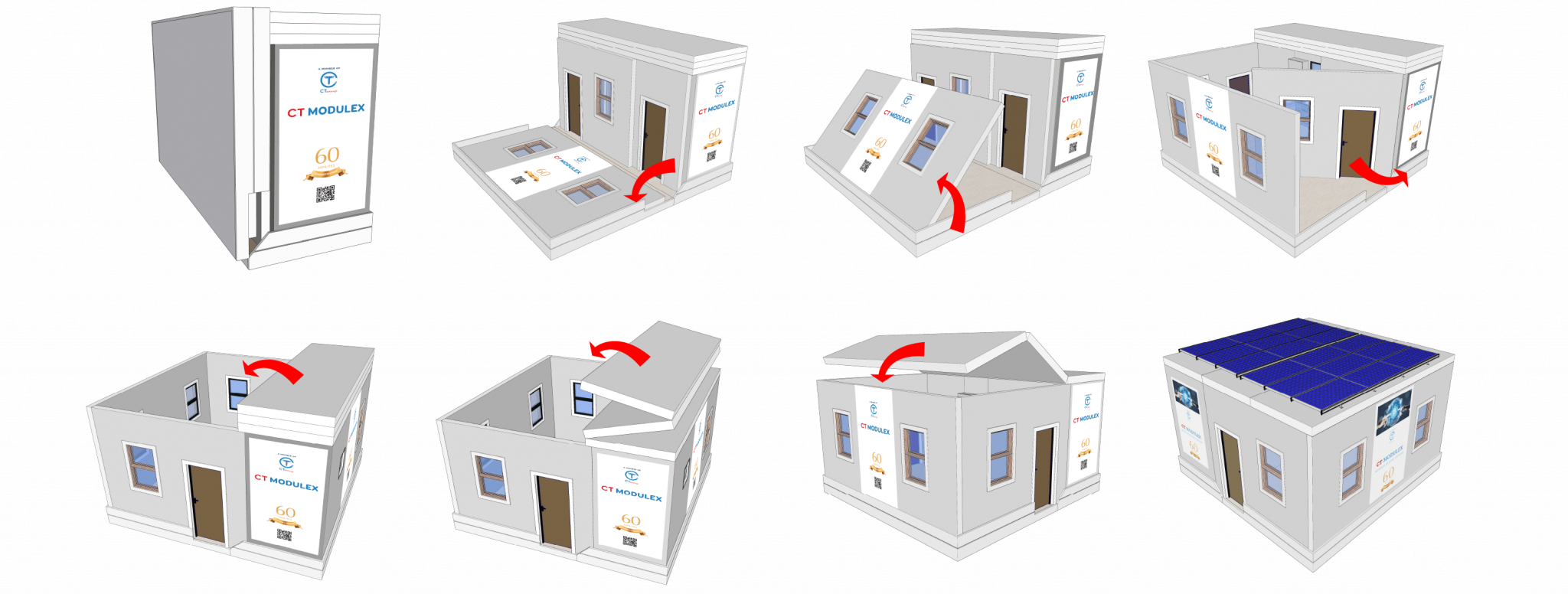
Foldable building technology allows structures to be transported in compact configurations and expanded into usable spaces at their destination.
WHAT SETS AUTOMATED FOLDING TECHNOLOGY APART?
Not every foldable home is capable of unfolding automatically.
Foldability refers to a structure’s ability to reduce its physical dimensions for easier storage or transportation. Automated folding and unfolding, however, involves mechanical drive systems and control technologies that manage the transition between different structural configurations.
This distinction lies at the heart of CT Modulex’s technology development.
In a robotic home, mechanical drive systems generate movement, while automated controls coordinate the folding and unfolding process according to a predefined sequence. Structural elements such as the roof, walls, and floor must move in synchronization to form the intended living space.
By integrating automation from the initial design stage, CT Modulex aims to reduce manual operations during deployment while improving control over structural movement.
However, successfully unfolding a building is only part of the challenge. The completed home must also meet essential requirements for safety, comfort, and everyday functionality. Structural stability, weatherproofing at connection points, electrical and plumbing systems, and practical interior layouts all need to be considered throughout product development.
Beyond automated deployment, CT Modulex is also exploring the integration of smart home technologies to support device management and enhance the living experience.
While robotic technology focuses on structural transformation and deployment, smart home systems are designed to improve convenience and comfort in daily life. Together, these technologies reflect CT Modulex’s three core principles: Robotic – Smart – Sustainable.
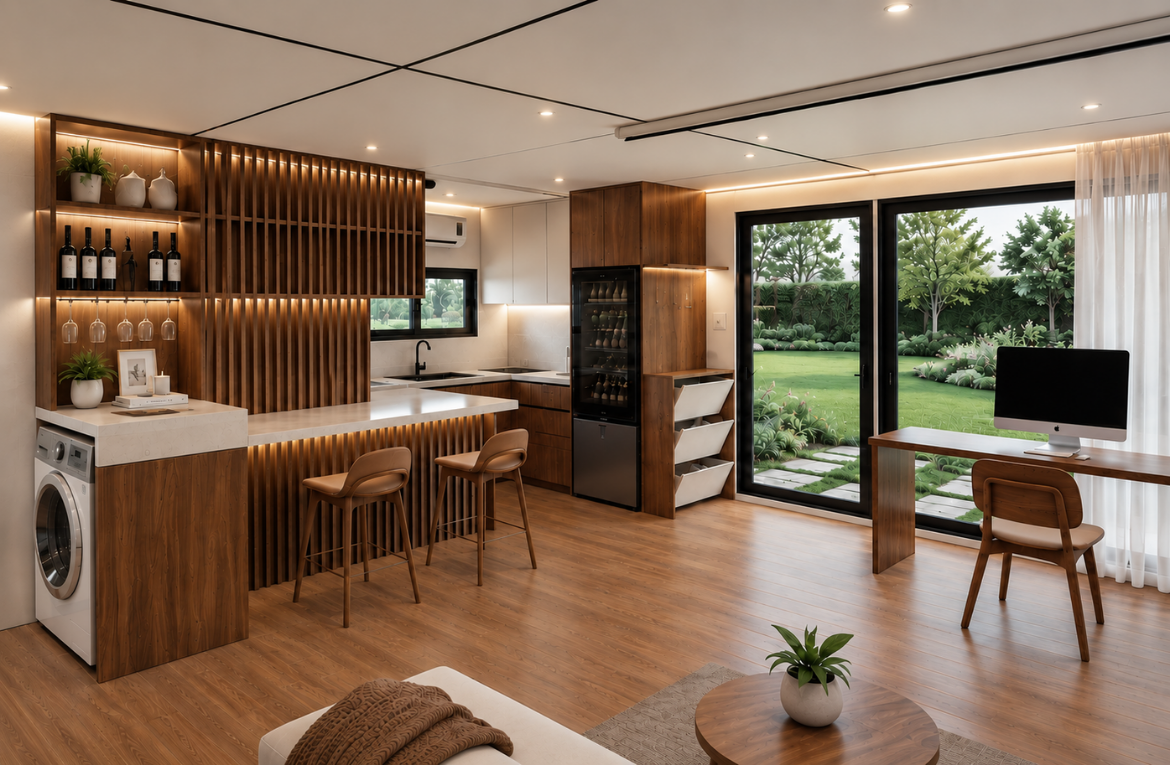
Modern modular living spaces combine adaptable design with the comfort and convenience of contemporary homes.
WHY IS CT MODULEX DEVELOPING FOLDABLE MODULAR HOMES?
Optimizing Transportation Space
One of the key challenges in modular construction is the size of building units during transportation.
When fully assembled modules are transported as single units, vehicles must accommodate the entire structure, including the empty interior space. This can increase shipping volume and create additional requirements for transportation vehicles, routes, and lifting equipment.
To address this challenge, CT Modulex is exploring structural designs that allow homes to be folded into more compact configurations before shipment. Factors such as folded dimensions, overall weight, component securing methods, and the protection of internal equipment are all considered during the design process.
The objective is to develop more practical transportation solutions while maintaining the ability to expand each unit into a functional living space at its destination.
Simplifying On-Site Installation
One of the advantages of modular construction is that many building components can be manufactured and prepared in a controlled factory environment.
For foldable homes, this preparation also involves engineering the connections and movement mechanisms required for efficient on-site deployment.
CT Modulex is developing its solution by combining prefabricated components with automated folding technology, aiming to reduce the amount of manual assembly required at the installation site.
Nevertheless, site preparation, foundations or supporting structures, auxiliary equipment, and utility connections must still be assessed according to the specific requirements of each project.
Enabling Relocation and Reuse
Not every building is intended to serve the same purpose in the same location throughout its entire lifespan.
A construction site office may need to be relocated once a project is completed. A hospitality facility may need to adjust its capacity or location as business requirements change. In such situations, the ability to relocate and reuse buildings can offer long-term value to investors and operators.
This is another important consideration in CT Modulex’s design philosophy.
Through its research into folding technology, CT Modulex aims to develop adaptable spaces that can be folded, transported, and redeployed as needs evolve.
The feasibility of relocation and reuse must also be evaluated alongside structural integrity, maintenance requirements, transportation conditions, and installation needs at the new location.
FOLDING TECHNOLOGY AND THE EXPORT POTENTIAL OF MODULAR HOMES
For building solutions intended for international markets, transportation considerations must be integrated into product development from the outset.
A modular home may travel through multiple stages before reaching its final destination, including road transportation, ocean freight, cargo handling, and on-site installation.
With this in mind, CT Modulex is exploring compact folding designs as a way to optimize the arrangement of building components for containerized shipping.
Beyond physical dimensions, factors such as weight, product protection, handling requirements, and local installation capabilities are also essential when evaluating overall logistics efficiency.
As CT Modulex looks to serve both domestic and international markets, the company places particular emphasis on understanding customer needs, technical standards, and local deployment conditions.
These insights will help guide further technology development, design refinements, and the establishment of suitable supply and delivery solutions.
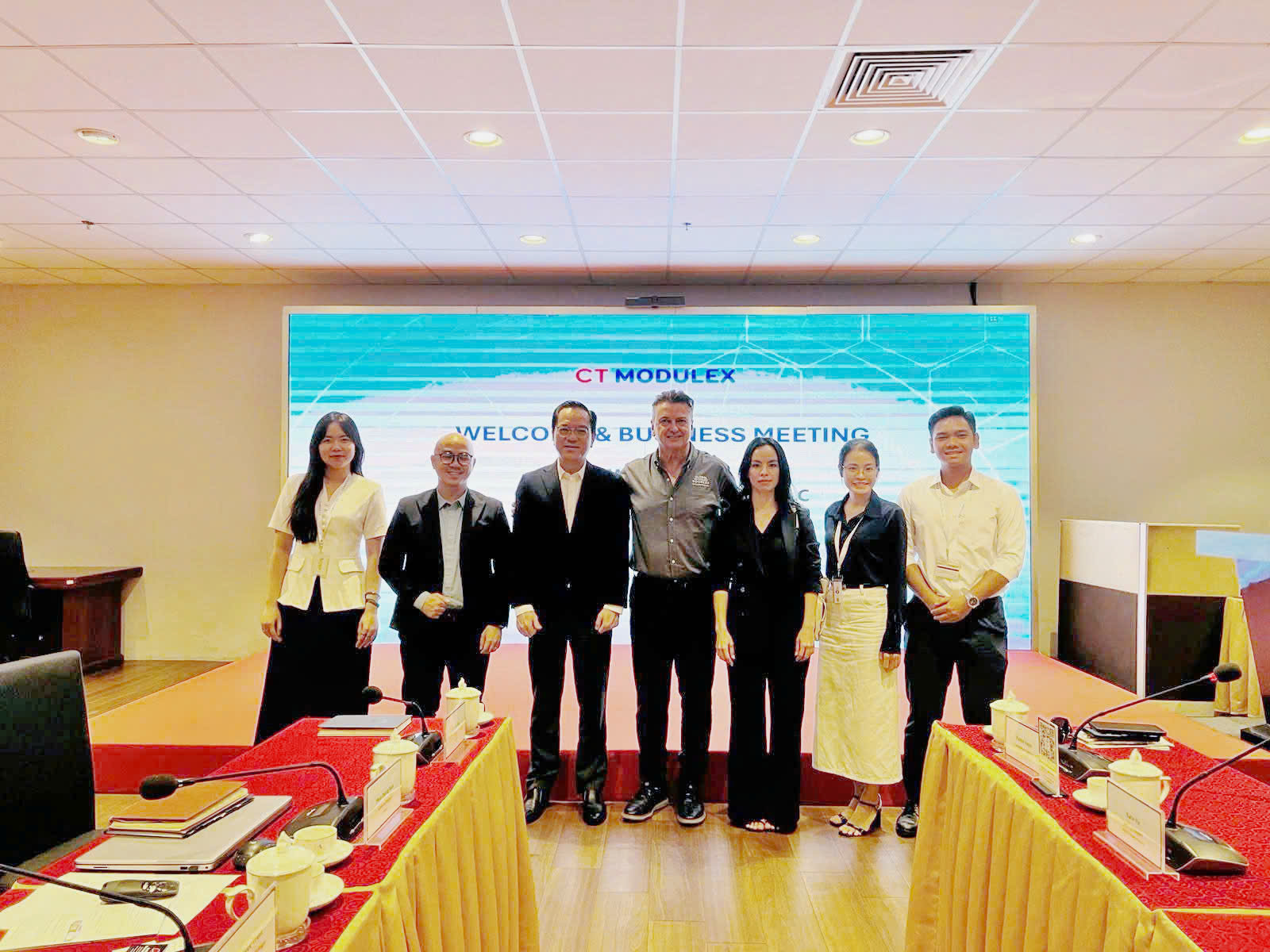
CT Modulex representatives discuss opportunities to introduce robotic housing solutions to the United States market.