
For decades, residential construction has largely relied on on-site building processes. However, increasing pressure from housing shortages, rising labor costs, project timeline demands, and sustainability requirements is driving the industry toward a new approach: shifting more construction activities into controlled factory environments. Modular housing is not simply a new architectural solution. It represents a broader transformation toward the industrialization of construction, where buildings are designed, manufactured, and deployed as standardized systems that can be transported, scaled, and adapted based on changing needs.
What Is a Modular House?
A modular house is a building composed of one or multiple three-dimensional modules. These modules are manufactured and partially completed in a factory environment before being transported to the construction site for final assembly.
Depending on the technology and intended application, each module can be integrated with structural components, walls, flooring, electrical systems, plumbing, and interior elements before delivery.
The key difference of modular construction does not lie in its appearance or materials, but in its production approach. Instead of carrying out the entire construction process on-site, a significant portion of the work is transferred into a controlled factory environment, enabling better management of quality, timeline, and cost.
Modular houses are not the same as container houses or temporary structures. They represent an industrialized approach to designing and manufacturing buildings, with applications across residential housing, hospitality, offices, public facilities, and projects requiring rapid deployment.
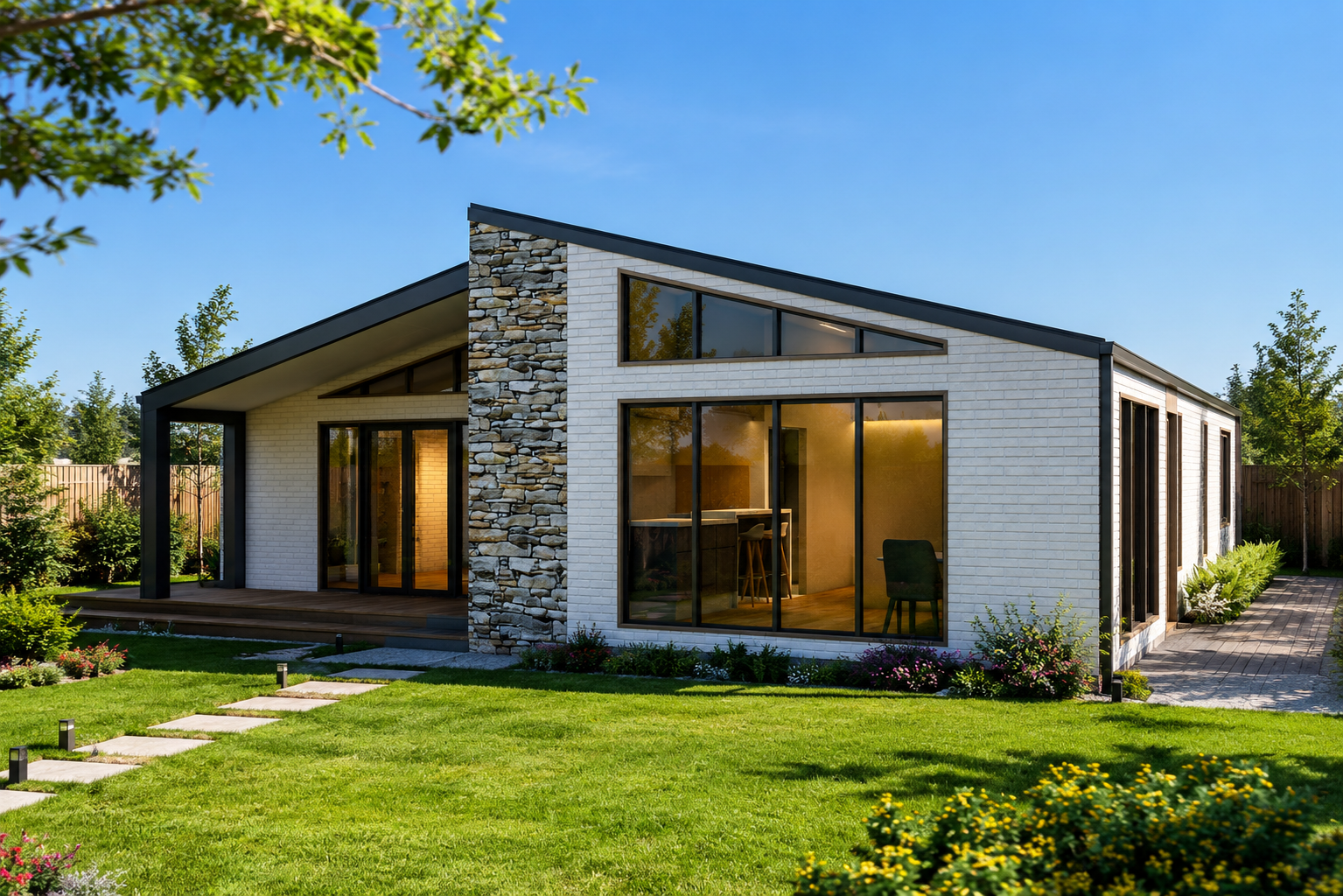
Picture shown is for illustration purpose only
Why Is Modular Construction Becoming a Global Trend?
The Construction Industry Needs a More Efficient Approach
The global construction industry is facing multiple challenges, including skilled labor shortages, rising construction costs, increasing housing demand, and growing pressure to reduce environmental impacts.
In this context, modular construction is gaining attention worldwide due to its ability to shift part of the construction process from traditional job sites into industrial manufacturing environments. According to the Modular Building Institute, the modular construction market in the United States continues to expand steadily, demonstrating that this approach is becoming increasingly recognized as a mainstream construction solution rather than a niche alternative.
In markets such as Australia and New Zealand, factory-based construction models are also being driven by high labor costs, challenging geographic conditions, and the need to deploy buildings in remote locations.
Buildings Are Being Developed as Industrial Products
One of the biggest changes brought by modular construction is the way the industry views a building.
Instead of designing and constructing every project as a completely unique process, modular construction applies standardized design platforms and components that can then be customized based on specific requirements, including size, function, and user needs.
This approach shares similarities with the automotive industry. Core components are standardized to ensure consistent production quality, while the final product can still be customized for different applications.
Foldable and expandable modular systems are further advancing this approach by addressing one of the major challenges of traditional modular construction: logistics. By reducing the volume of a structure during transportation and expanding it at the destination, these solutions enable more flexible deployment, especially in locations with limited access.
Digital Technology and Automation Are Transforming Modular Construction
The development of BIM, AI, robotics, and automation is bringing modular construction closer to an industrial manufacturing model.
These technologies support the entire process, from design and structural simulation to production management and quality control. Instead of only optimizing construction activities on-site, the industry is moving toward optimizing the entire value chain — from design and manufacturing to transportation and installation.
For next-generation modular housing, competitive advantages are no longer limited to faster construction. They also come from creating more predictable processes in terms of quality, cost, and project timelines.
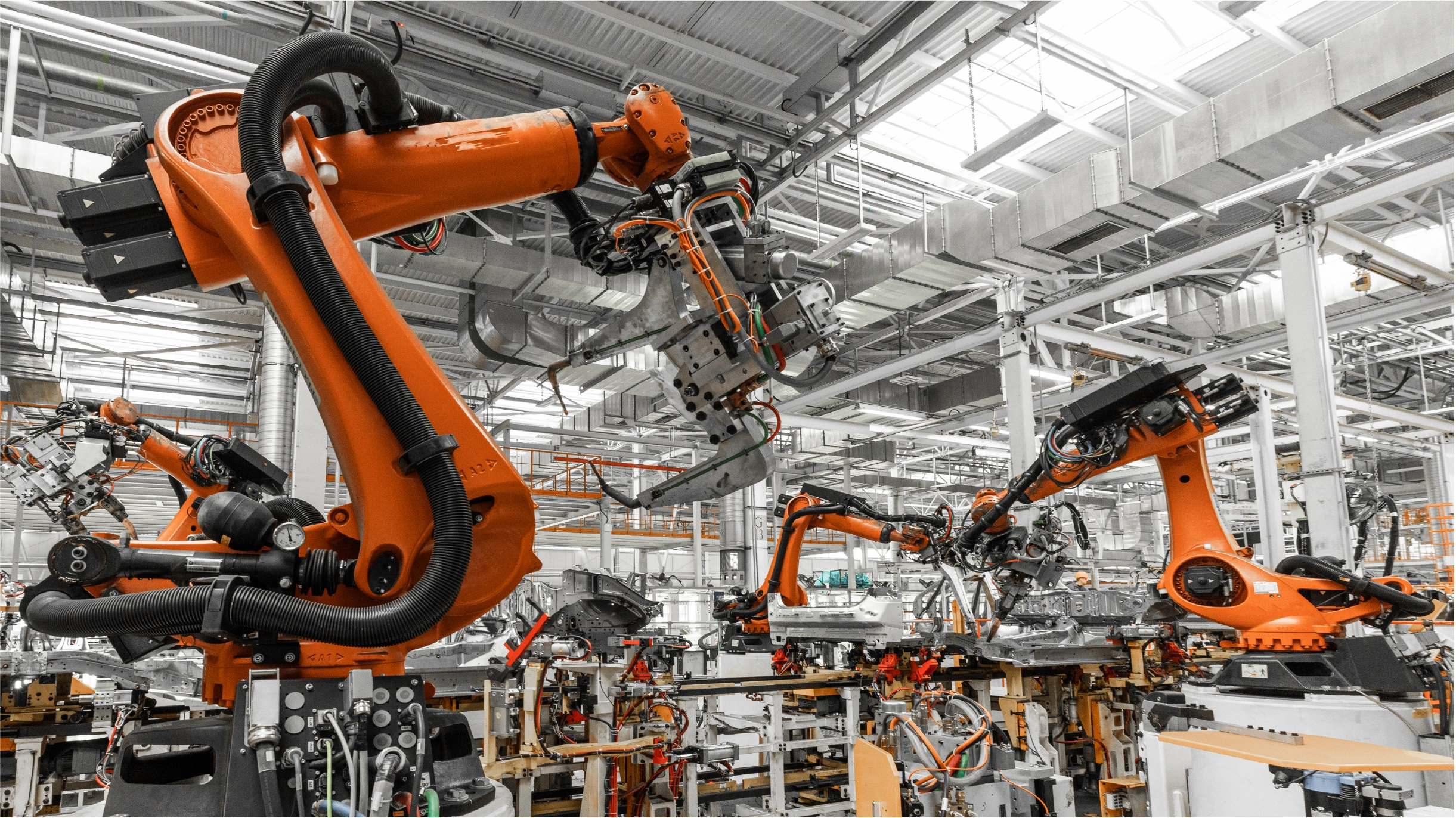
Picture shown is for illustration purpose only
Opportunities for Modular Construction in Vietnam
In Vietnam, rapid urbanization, growing demand for housing, tourism development, and projects requiring faster deployment are creating new opportunities for modular construction.
Potential applications include residential housing, tourism accommodation, temporary offices, remote facilities, and projects requiring flexible deployment capabilities.
However, for modular construction to develop into a large-scale industry, Vietnam still needs further improvements in technical standards, certification processes, design methodologies, and manufacturing ecosystems.
How Does CT Modulex Approach the Modular Construction Trend?
As part of the global shift toward industrialized construction, CT Modulex is researching and developing foldable modular spaces that can be compacted for transportation and deployed at the intended location.
Rather than viewing modular housing as a ready-made construction product, CT Modulex aims to develop an integrated system that connects design, mechanical engineering, materials, manufacturing, logistics, and operation.
The CT Modulex solution focuses on addressing key challenges of next-generation modular construction:
- Optimizing transportation efficiency through foldable design
- Reducing deployment time at construction sites
- Standardizing manufacturing processes in factories
- Integrating technical systems to enhance operational performance
In the future, modular construction will not only represent a new building method but could become a flexible spatial platform that combines manufacturing technology, automation, and adaptability to evolving user needs.
CT Modulex will continue sharing insights into emerging modular construction trends and product development journeys, contributing to a clearer vision of the future of flexible and intelligent living spaces.
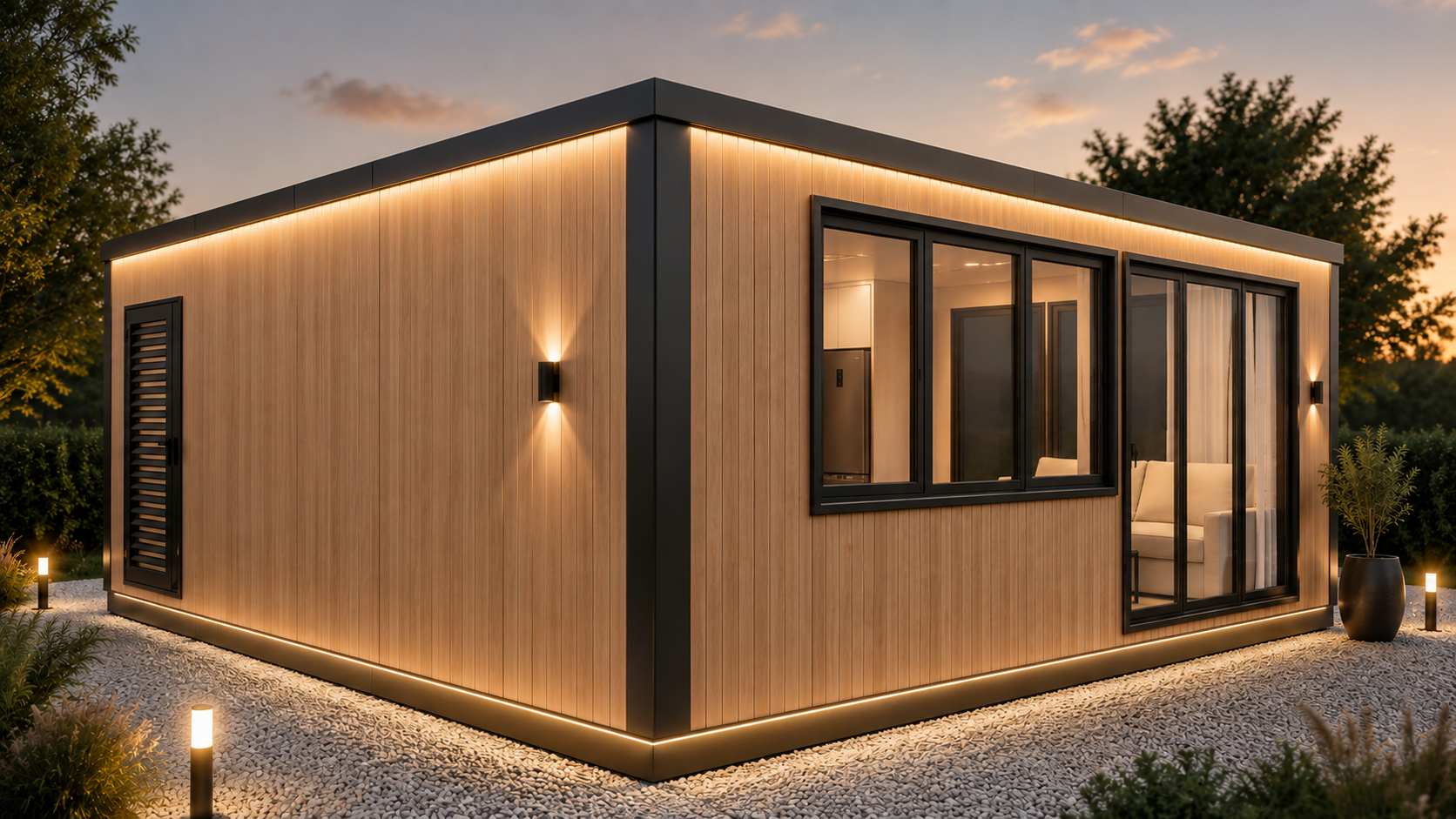
Picture shown is for illustration purpose only