
The success of Chinese prefabricated homes in international markets highlights an emerging direction for the construction industry: buildings can be manufactured in one country, transported, and deployed in another. As global demand for housing and advanced construction solutions continues to grow, Vietnam has an opportunity to strengthen its participation in this evolving market. With its automatic folding and unfolding robotic house technology, CT Modulex is advancing its research and development efforts toward bringing Vietnamese-made solutions to international markets.
THE GLOBAL MODULAR HOUSING MARKET: WHAT OPPORTUNITIES LIE AHEAD FOR VIETNAM?
According to VietTimes, citing data from China’s General Administration of Customs, the country’s exports of prefabricated buildings exceeded USD 4.3 billion in 2025, nearly tripling compared to 2015. Notably, these exports are no longer limited to temporary shelters or construction-site facilities but have expanded into residential housing, accommodation facilities, resorts, and commercial spaces.
This growth reflects a shift in how the construction industry approaches building development. Rather than carrying out most construction activities on-site, building components and modules can be manufactured and partially or fully completed in factories before being transported to their intended locations.
For markets facing high labor costs or requiring shorter construction timelines, this approach offers greater flexibility in project scheduling, quality management, and construction operations.
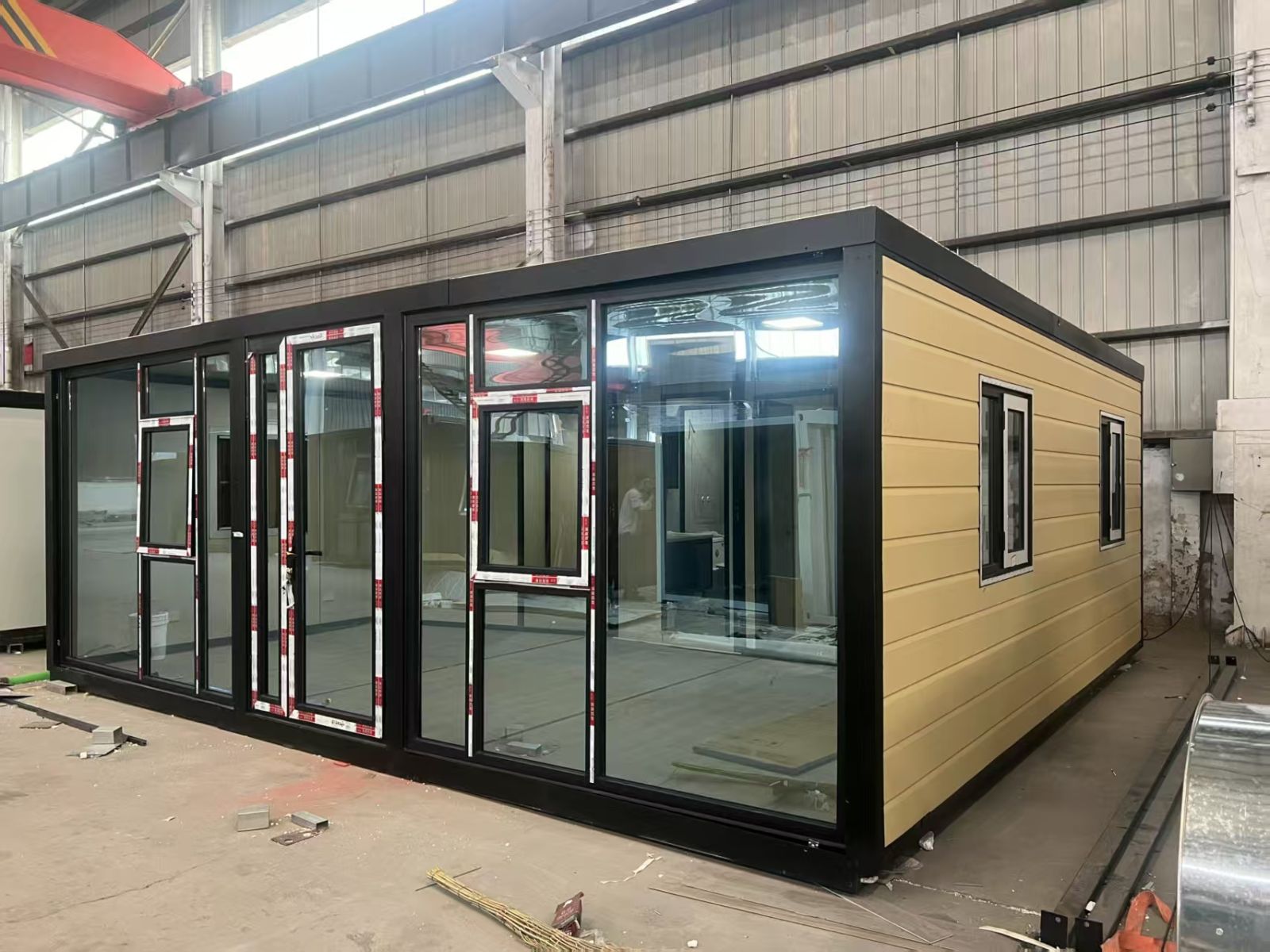
Prefabricated homes are manufactured in advance and transported as modular units.
How can Vietnam participate in the global modular housing export market?
Vietnamese enterprises have already taken their first steps. According to Gia Lai Newspaper, a company based in Binh Dinh began exporting prefabricated homes directly to the United States in 2023 while developing additional orders for international markets.
This demonstrates that construction products manufactured in Vietnam have the potential to enter markets with demanding requirements. However, to strengthen their competitive position, Vietnamese enterprises must move beyond manufacturing capabilities toward greater control over product design, technology, and the development of distinctive, value-added solutions.
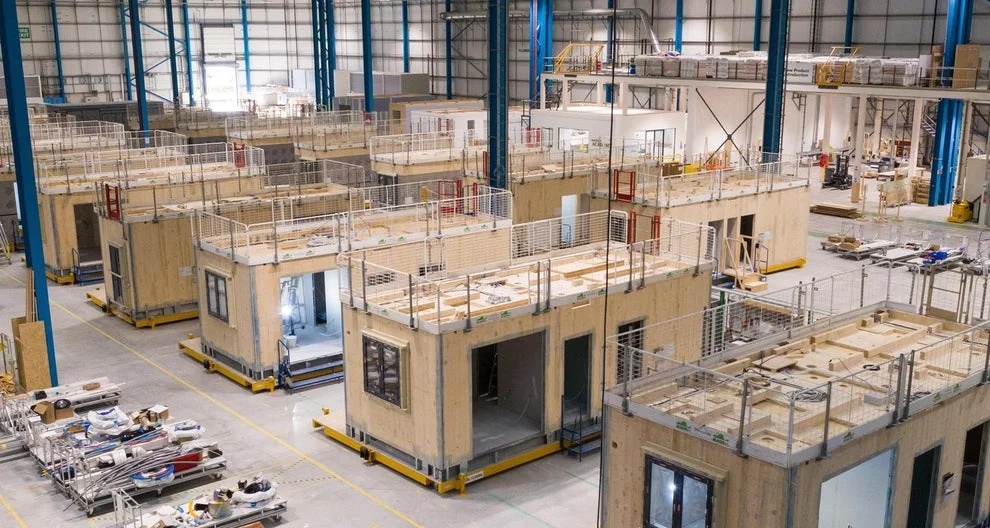
Factory-based modular housing production supports component standardization and quality control.
WHAT OPPORTUNITIES EXIST FOR MODULAR HOUSING IN AUSTRALIA AND THE UNITED STATES?
The demand for more efficient construction methods is becoming increasingly evident across developed economies, particularly in Australia and the United States.
In Australia, the government announced a AUD 39.3 million initiative in October 2026 to accelerate the adoption of Modern Methods of Construction (MMC). Modular construction and off-site manufacturing are among the approaches being promoted to improve productivity and accelerate housing delivery.
This direction also creates opportunities for businesses capable of supplying building materials, prefabricated components, and modular construction solutions. According to Vietnam’s Ministry of Industry and Trade, Australia’s growing adoption of prefabricated construction is expanding demand for modern building products and solutions from international suppliers.
Meanwhile, the United States continues to face a significant housing supply shortage. A Realtor.com report published in March 2026 estimated that the US housing supply gap reached approximately 4.03 million homes in 2025.
Growing pressure on housing supply, construction costs, and project timelines has increased interest in industrialized building solutions, including modular housing.
However, strong market demand does not necessarily mean that every prefabricated housing solution can successfully enter these markets. Competitiveness depends on whether a product can meet local technical requirements, climatic conditions, building regulations, and cost-efficiency expectations.
These are essential considerations that Vietnamese enterprises must address from the earliest stages of product research and development.
CT MODULEX AND THE DEVELOPMENT OF AUTOMATIC FOLDING AND UNFOLDING ROBOTIC HOMES FOR INTERNATIONAL MARKETS
Recognizing the potential of modular construction, CT Modulex is researching and developing a new generation of intelligent robotic homes featuring automatic folding and unfolding technology, with the ambition of serving both domestic and international markets.
Unlike conventional construction methods, CT Modulex’s solution is being developed on a modular platform that combines a compact structure for transportation with automated expansion at the deployment site.
This development approach focuses on addressing three critical challenges in bringing modular buildings to international markets.
Optimizing Transportation Through Foldable Design
For modular housing exports, logistics costs are a key factor influencing competitiveness. Highly finished building modules often occupy substantial shipping space, increasing transportation, handling, and delivery requirements.
CT Modulex addresses this challenge from the product design stage by developing a structure that can be folded into a compact form for transportation and expanded when in use.
This approach aims to improve shipping space utilization while supporting the development of container transportation solutions suitable for long-distance international logistics.
Integrating Automatic Folding and Unfolding Technology
Beyond transportation, the process of deploying buildings at their intended locations also has a direct impact on project timelines and costs.
Rather than relying entirely on manual assembly, CT Modulex is researching the integration of mechanical drive systems and control technologies to automate the transformation from a compact structure into a functional space.
This technology aims to simplify on-site deployment while laying the groundwork for standardized installation procedures in the future.
For international markets, this represents a promising development direction, particularly in regions with high labor costs or projects requiring construction within limited timeframes.
Flexible Design and Multiple Applications
The potential of modular housing extends well beyond residential applications.
From resorts and accommodation facilities to project offices and community infrastructure, different customer segments have distinct requirements for floor area, spatial configuration, and operating conditions.
Through its modular design approach, CT Modulex is exploring the ability to adapt layouts, functions, and materials to the specific requirements of individual projects.
This flexibility is essential for developing solutions that can serve diverse market segments rather than being limited to a single standardized building model.
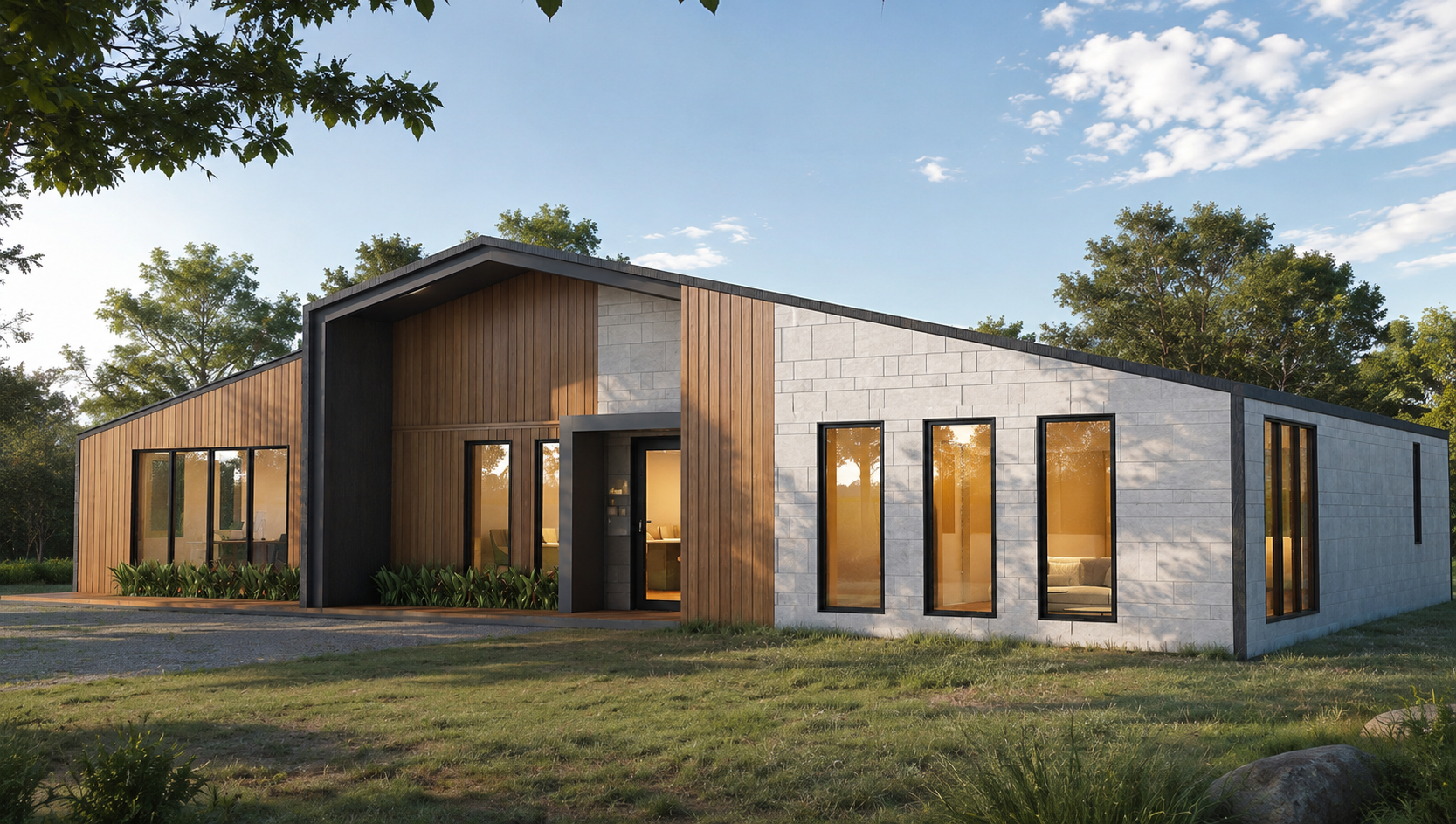
Concept rendering of a CT Modulex robotic home, reflecting the company’s vision for intelligent, flexible, and modern living spaces.
HOW IS CT MODULEX PREPARING TO ENTER THE AUSTRALIAN AND US MARKETS?
Alongside its product development activities, CT Modulex has proactively engaged with potential customers and partners in Australia and the United States to better understand market needs and explore future collaboration opportunities.
These discussions have provided valuable insights into the factors international customers consider when evaluating modular housing solutions, including design, materials, structural safety, transportation, installation, and technical support.
One of the most important considerations is the variation in construction standards and regulatory requirements across different markets.
In Australia, for example, building products and construction solutions must be assessed against applicable regulations, including the National Construction Code (NCC) and relevant technical standards. Requirements concerning structural performance, fire safety, materials, and building performance must all be considered throughout the design process.
In the United States, technical requirements and approval procedures may vary depending on the state, local jurisdiction, and building classification.
For a solution integrating automatic folding and unfolding mechanisms, such as CT Modulex’s robotic homes, meeting these requirements involves close coordination across architectural design, structural engineering, mechanical and electrical systems, and automation controls.
Furthermore, international transportation arrangements, site preparation, utility connections, and post-installation support must be considered as part of an integrated deployment strategy.
Insights gained from these market engagements will help CT Modulex continue reviewing its designs, refining technical solutions, and developing a product roadmap aligned with international market requirements.

CT Modulex strengthens business connections and explores opportunities for international collaboration.
BRINGING VIETNAMESE ROBOTIC HOUSING TECHNOLOGY TO GLOBAL MARKETS
The success of prefabricated housing exporters worldwide demonstrates that the construction industry is no longer constrained by geographical boundaries. A product researched and manufactured in Vietnam can potentially serve customers in distant markets, provided it meets the necessary standards for quality, technical performance, and deployment.
However, turning market opportunities into actual exports requires more than technological advantages. Manufacturing capabilities, product testing, regulatory compliance, and market-specific service support are equally essential to achieving long-term competitiveness.
For CT Modulex, this journey begins with researching and developing its own automatic folding and unfolding robotic housing technology, while aligning product innovation with a deeper understanding of international customer needs.
From a solution developed in Vietnam, CT Modulex aspires to create intelligent, flexible, and adaptable spaces that can respond to diverse needs across global markets.