
From family homes and holiday resorts to project offices and community facilities, the demand for versatile building solutions continues to grow. Through its automated folding modular home technology, CT Modulex is developing adaptable spaces designed to meet diverse needs across different environments and applications.
WHAT NEEDS CAN CT MODULEX MODULAR HOMES ADDRESS?
Every building serves a particular purpose. A family home should provide comfort and privacy, a resort should offer memorable guest experiences, while a construction site office must prioritize operational efficiency and ease of relocation.
Recognizing these different requirements, CT Modulex is developing automated folding modular homes that integrate architectural design with mechanical engineering and control systems. These structures are designed to fold into compact configurations for transportation and expand into functional spaces at their destination, with relocation and reuse also considered in their development.
Building on this technology, CT Modulex is exploring four key application areas: residential housing and resettlement; tourism and hospitality; offices, commercial spaces, and events; and essential facilities and emergency shelters.
Each application presents different requirements for functionality, duration of use, and site conditions. Selecting the right solution therefore begins with understanding the specific needs of each project.
MODULAR HOMES FOR RESIDENTIAL HOUSING AND RESETTLEMENT
Adaptable Living Spaces for Individuals and Families
A home should do more than meet basic needs such as sleeping, cooking, and spending time together. It should also reflect the number of occupants, their daily routines, and their expectations for privacy and comfort.
For example, someone living alone may prefer a compact, multifunctional layout. Meanwhile, a family with young children may require a larger shared living area, separate bedrooms, and practical interior arrangements that support everyday activities.
As part of its residential housing development, CT Modulex is exploring designs that can accommodate different living requirements, from interior layouts and functional areas to building systems and amenities.
Folding technology is incorporated into the design process to support transportation and deployment, while the quality and functionality of the finished living space remain essential considerations.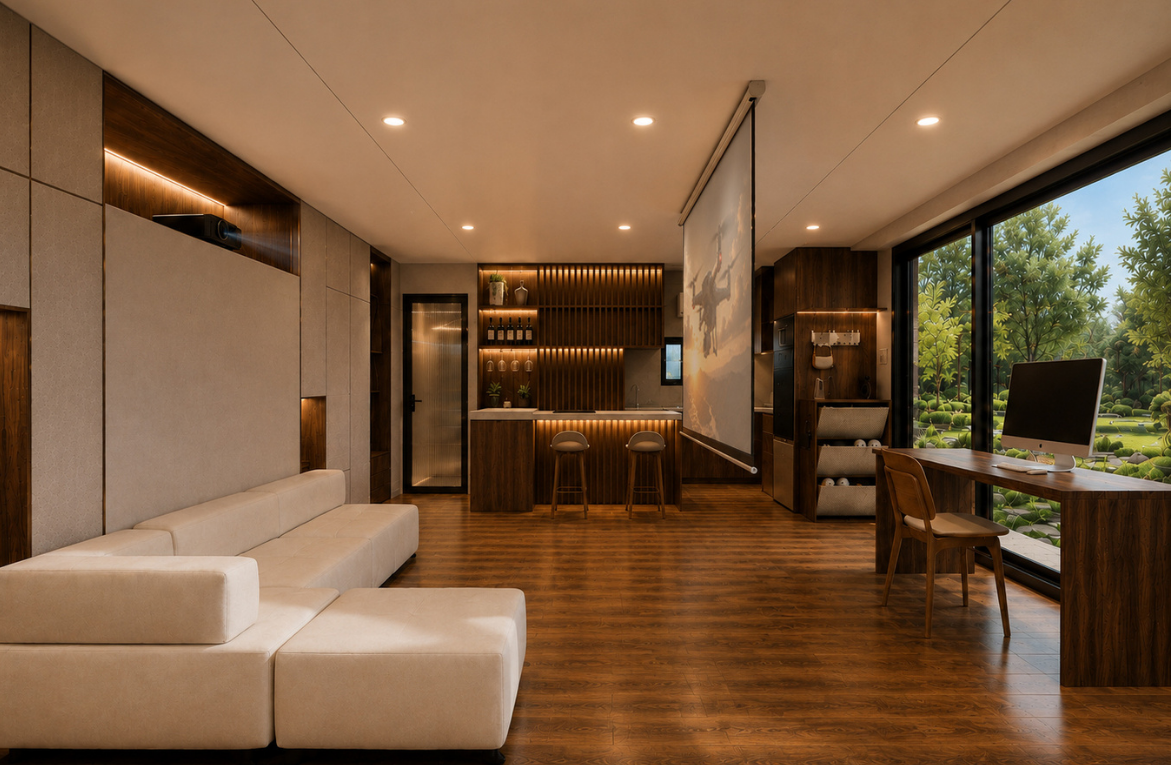
CT Modulex’s modular homes provide comfortable living spaces with an open design.
Housing Solutions for Resettlement Projects
In resettlement projects, providing new homes is only part of the challenge. Equally important is ensuring that residents can establish stable living conditions and access essential services.
Beyond the design of individual homes, resettlement planning must consider the broader community, including road access, electricity, water supply, drainage, and shared facilities.
CT Modulex identifies resettlement housing as one of the potential applications of modular construction, with opportunities to explore different housing layouts based on project scale and local conditions.
However, the effectiveness of any housing solution depends not only on the buildings themselves but also on their integration with surrounding infrastructure and their ability to support the community’s long-term needs.
MODULAR HOMES FOR TOURISM AND HOSPITALITY
In the hospitality industry, accommodation plays a central role in shaping the guest experience.
A well-designed guest room should provide comfort and convenience while complementing its surroundings, ensuring privacy, and offering easy access to amenities. For resort developers, the arrangement of accommodation units also influences site planning, operational efficiency, and the overall guest experience.
With these considerations in mind, CT Modulex is exploring the use of modular homes in tourism and hospitality developments, with designs that can be adapted to different locations and guest segments.
For example, when expanding a resort, developers must evaluate the number of additional rooms, their locations, views, accessibility, and connections to existing infrastructure.
If future expansion, relocation, or changes in site layout are anticipated, transportation and reuse considerations should also be incorporated into the initial planning process.
In this context, folding modular technology offers an alternative approach to developing accommodation facilities. Nevertheless, the suitability of each solution must be assessed against actual site conditions, operational requirements, and investment objectives.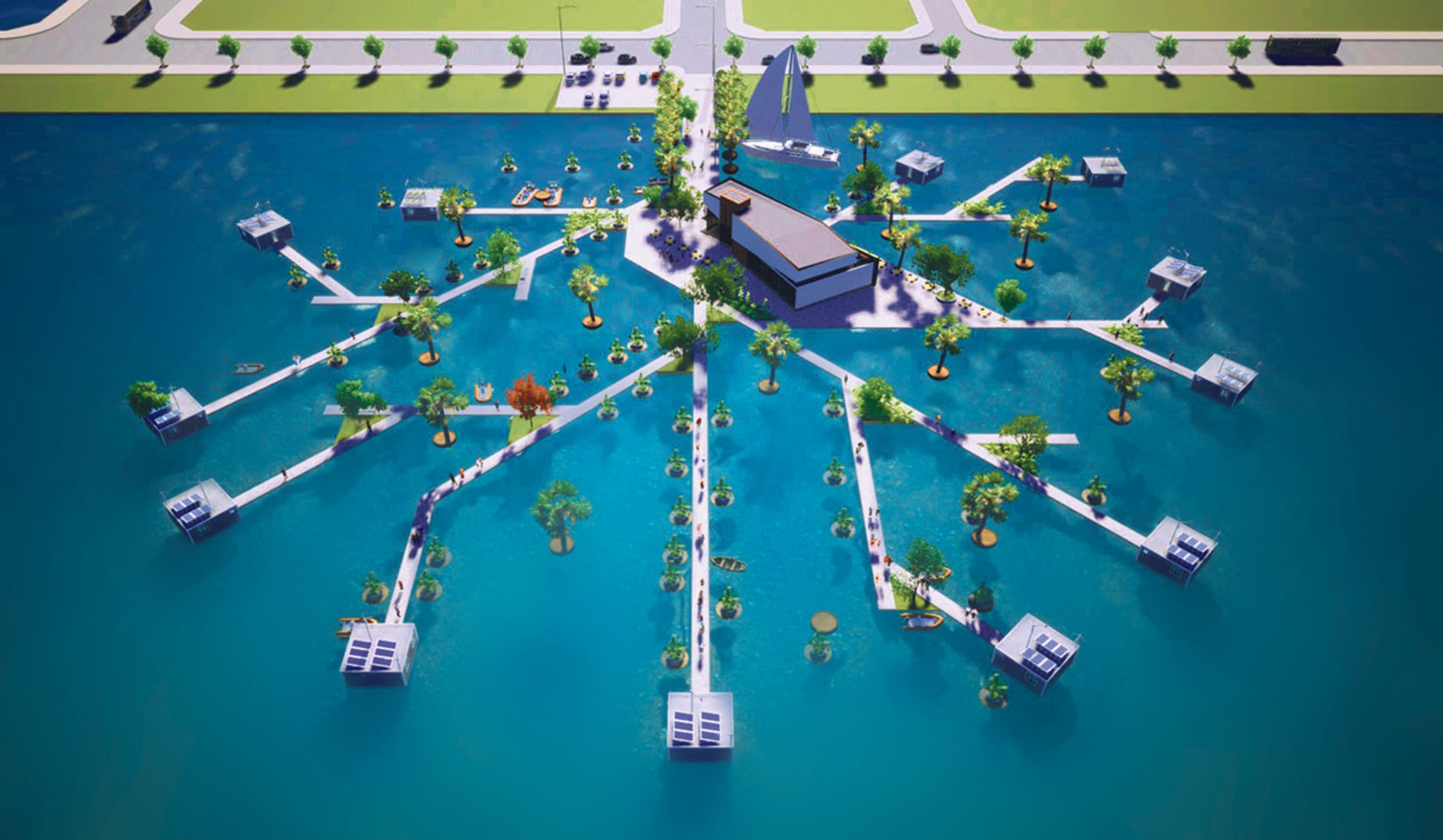
Perspective view of a resort development using CT Modulex’s modular homes.
MODULAR OFFICES, COMMERCIAL SPACES, AND EVENT FACILITIES
Flexible Offices That Adapt to Project Timelines
Not every office needs to remain in the same location for years.
Construction sites, industrial facilities, and infrastructure projects often require temporary spaces for daily operations, meetings, and client visits. Once a project is completed, the need for an office at that location may come to an end.
This creates opportunities to explore modular buildings designed with relocation in mind.
CT Modulex is developing office solutions that can be configured according to workforce size, operational needs, and site conditions. Electricity, data connectivity, workplace amenities, and accessibility must all be considered during the design process.
For companies managing projects across multiple locations, the potential to recover, transport, and reuse office facilities may become an important factor in investment decisions.
Commercial Spaces and Event Facilities
Trade fairs, exhibitions, promotional events, and temporary retail outlets share one common characteristic: their space requirements are often tied to specific dates and locations.
An exhibition booth needs to support product displays and visitor engagement, while a sales office or product showroom requires a layout suited to customer interactions and business activities.
For these applications, CT Modulex is exploring modular spaces that can be transported and deployed according to event or business requirements.
Each design must accommodate its intended purpose, entrances and exits, interior arrangements, and connections to surrounding facilities. Transportation, installation, and removal schedules must also align with the event timeline.
As a result, relocation and reuse can be considered as part of a broader strategy for operating across multiple events or locations.
MODULAR BUILDINGS FOR ESSENTIAL FACILITIES AND EMERGENCY SHELTERS
During natural disasters or situations requiring additional community facilities, suitable spaces often need to be provided under significant time and resource constraints.
These may include temporary accommodation for displaced residents, medical support facilities, or buildings that serve other essential community needs.
CT Modulex is exploring modular construction applications for these purposes, with particular attention to compact transportation and deployment at the intended location.
However, each type of facility comes with its own requirements.
Medical facilities must be designed according to their intended functions, including clinical workflows, hygiene standards, and the necessary technical infrastructure.
For emergency shelters, priorities may include selecting safe locations, ensuring accessibility, and providing clean water, sanitation, and suitable living conditions for affected residents.
Therefore, the ability to transport and unfold a building is only one part of the solution. To effectively serve communities during emergencies, building design must be supported by appropriate infrastructure, deployment planning, and operational arrangements.
Modular homes provide shelter solutions for areas frequently affected by natural disasters.